

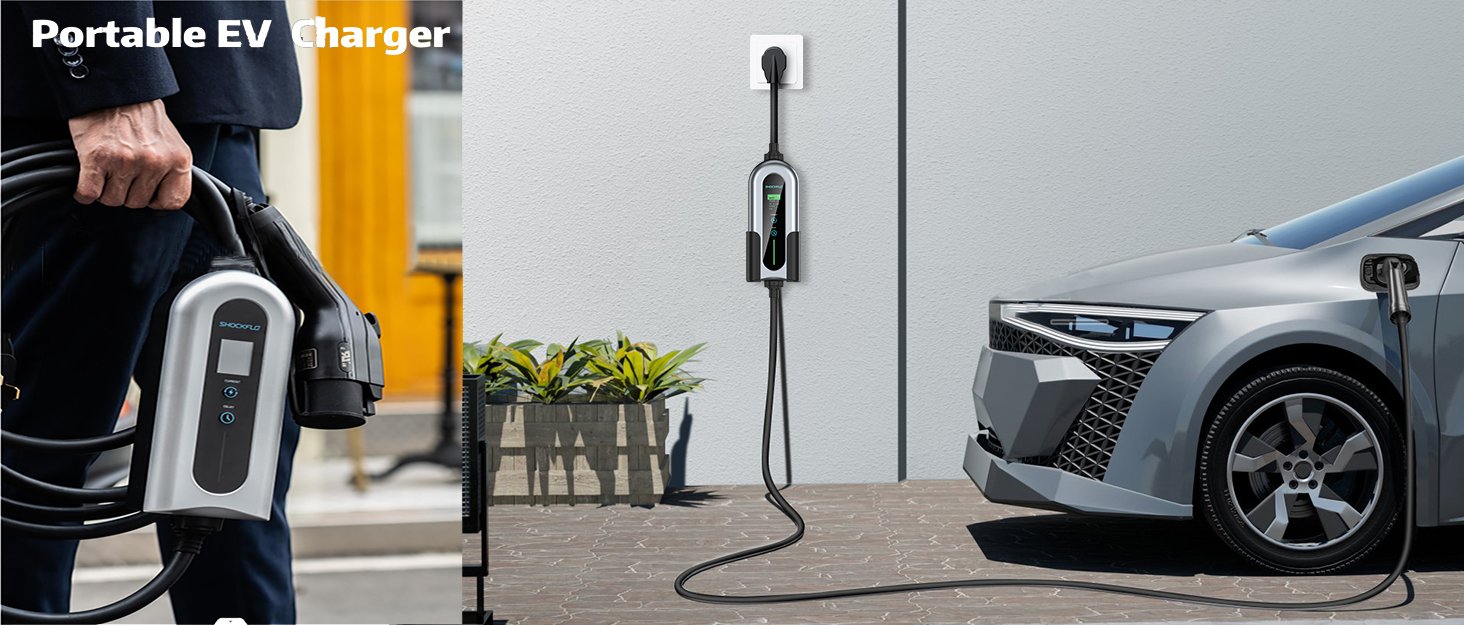
How to Use Off-Peak Charging to Cut Your EV Electricity Bill in Half
One of the most compelling but least discussed advantages of home EV charging is the ability to shift your electricity consumption to the cheapest hours of the day. Most US utility companies offer time-of-use rate plans where nighttime electricity costs 40 to 60 percent less than peak daytime rates. A smart Level 2 charger with scheduling turns this pricing structure into significant annual savings — automatically, every night, with no daily effort on your part.
What Time-of-Use Pricing Actually Means
Standard residential electricity pricing charges a flat rate per kilowatt-hour regardless of when you consume power. Time-of-use (TOU) pricing instead varies the rate based on demand: electricity costs more during periods of peak grid demand — typically weekday afternoons and evenings — and costs significantly less during low-demand periods, usually overnight and on weekends.
This pricing structure exists because generating and transmitting electricity during peak demand periods requires utilities to bring additional generation capacity online at higher cost. When demand is low — overnight — the same capacity sits largely idle. Utilities pass the cost difference through to consumers via TOU rates, incentivizing consumption during off-peak windows.
For EV owners, this creates a direct financial opportunity: a vehicle that charges at night, during off-peak hours, costs dramatically less to operate than one that charges at random times throughout the day.
Annual Savings Example: 15,000 Miles Per Year
These figures vary by utility, region, and vehicle efficiency — but the direction is consistent across nearly every TOU rate plan in the country. Off-peak charging is cheaper, and the difference compounds meaningfully over years of ownership.
How to Find Your Utility’s Off-Peak Window
The first step is identifying your utility’s specific TOU rate schedule. Not every utility offers TOU plans, and those that do have varying window definitions. Here is how to find yours:
- Check your electricity bill. Many utilities list available rate plans on the monthly statement or include a code indicating your current plan. Look for terms like “Time-of-Use,” “TOU,” “EV rate,” or “dynamic pricing.”
- Visit your utility’s website. Search for “rate plans,” “electricity rates,” or “EV charging rates.” Most major utilities publish TOU schedules in their residential rate comparison tools.
- Call your utility’s customer service line. Ask specifically whether a TOU or EV-specific rate plan is available for residential customers, and whether it requires a special meter or enrollment process.
- Enroll if required. Some utilities require active enrollment in a TOU plan before the rate applies. Enrollment is typically free and processed within one billing cycle.
Common Off-Peak Windows by Major US Utility
The Real Cost Difference: A Typical Rate Comparison
In this example, charging during off-peak hours costs $0.12 per kilowatt-hour versus $0.38 during peak hours — a 68 percent reduction. Charging a 75 kWh battery from 20 percent to full requires approximately 55 kWh. At off-peak rates, that costs $6.60. At peak rates, the same charge costs $20.90. For a driver doing this five times per week, the annual difference is over $1,500.
How to Configure Off-Peak Charging with Your ShockFlo Charger
Both the ShockFlo G1 and S1 include full app-based scheduling at no subscription cost. For complete setup instructions, see our ShockFlo charger review. The basic configuration involves three steps:
- Open the ShockFlo app and navigate to Schedule. You will see a weekly calendar where charging windows are configured per day.
- Set the start time to the beginning of your off-peak window. If your utility’s off-peak period starts at 11 PM, set the schedule to begin at 11 PM. The charger delays automatically regardless of when you plug in.
- Set the end time based on when you need the vehicle. If you leave at 7 AM, set the end time to 6:30 AM as a buffer. The charger runs from 11 PM to whenever your vehicle is fully charged or the window ends — whichever comes first.
Once configured, your daily routine is simple: plug in when you get home, and trust the schedule. You do not need to remember what time to start charging — the charger handles it.
Beyond TOU: Additional Ways to Reduce EV Charging Costs
EV-Specific Rate Plans
Several utilities now offer rate plans designed specifically for EV owners, with off-peak windows wider or cheaper than standard TOU plans. In California, for example, PG&E’s EV rate plan offers overnight rates below $0.10 per kilowatt-hour — lower than the standard TOU plan. Check with your utility whether an EV-specific plan is available.
Demand Response Programs
Some utilities offer incentives for customers who allow the utility to briefly reduce or pause charging during periods of grid stress — typically heat waves or cold snaps. Participation often comes with bill credits or direct payments. These programs work seamlessly with smart chargers that can be paused and resumed remotely.
Avoiding “Vampire” Charging
Charging from 100 percent down to 80 percent and back to 100 percent repeatedly — “top-up” charging — is less efficient than a single overnight session. Where possible, allow the battery to deplete to 20 to 30 percent before charging, and charge fully overnight during off-peak hours. This reduces the number of sessions and maximizes off-peak rate utilization.
Does Off-Peak Charging Affect Battery Health?
No. Level 2 charging at any time of day — peak or off-peak — has no differential effect on battery health. The electricity itself is identical regardless of when it is drawn from the grid. The off-peak scheduling simply determines when the charging session begins, not the quality or safety of the charge delivered.
| Scenario | Annual kWh (15k miles) | Rate | Annual Cost |
|---|---|---|---|
| No scheduling (random time) | 4,500 kWh | $0.26 avg | $1,170 |
| Off-peak scheduling | 4,500 kWh | $0.12 off-peak | $540 |
| Annual saving | — | — | $630 saved |
ShockFlo G1 40A — Smart Scheduling Included
Full off-peak scheduling in the free ShockFlo app. No subscription, no extra cost.
Conclusion
Off-peak scheduling is the single most financially impactful smart charger feature — and the easiest to set up. For most EV owners on a time-of-use electricity plan, configuring a charging schedule can save $300 to $600 per year or more, depending on your utility’s rate differential and how many miles you drive. The ShockFlo G1 40A and ShockFlo S1 both include full scheduling capability in the free ShockFlo app. Explore the full lineup at portable EV chargers and home EV chargers.
Frequently Asked Questions
Do I need to enroll in a TOU plan to benefit from off-peak scheduling?
Yes, to receive the rate benefit, you must be on a TOU or similar variable-rate plan. On a flat-rate plan, the time of charging does not affect your cost — though scheduling is still useful for delaying charging to avoid peak demand surcharges in some markets. Contact your utility to enroll in a TOU plan if one is available.
What if my off-peak window is not long enough to fully charge my vehicle?
This depends on your battery size, vehicle’s onboard charge rate, and charger output. A ShockFlo G1 at 40A charges most 75 kWh vehicles from 20 percent to 100 percent in approximately 8 hours — fitting within most off-peak windows. If your window is shorter, the ShockFlo S1 at 48A reduces charge time by approximately 20 percent.
Can I override the schedule if I need an immediate charge?
Yes. The ShockFlo app includes an option to override the scheduled delay and begin charging immediately — useful when you arrive home with less range than expected and need to leave again soon. The override applies to a single session; the regular schedule resumes for the next session.
Does the ShockFlo Gmini also support scheduling?
Yes. The ShockFlo Gmini 16A includes the same scheduling functionality through the ShockFlo app. All three ShockFlo chargers support off-peak scheduling at no subscription cost.